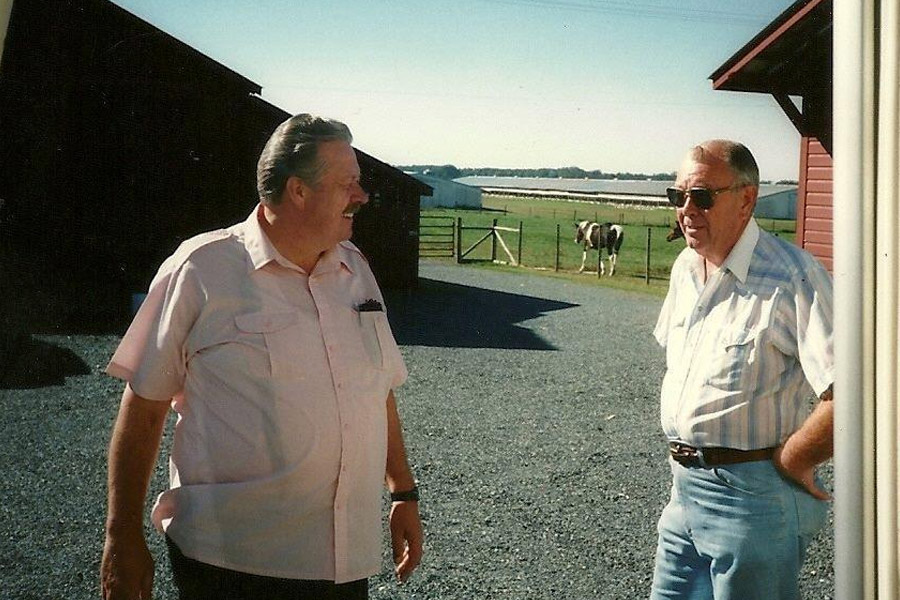
A life rooted in Marshville
I picture Harold Bruce Traywick as the kind of man you meet at sunrise, boots already dusty, hands set to a day of work before the rooster makes a sound. Born March 31, 1933, in Marshville, North Carolina, and passing on October 8, 2016, he lived a life knitted tightly to place, family, and the steady rhythms of small town enterprise. He ran a meat route. He raised cattle and horses. He owned a turkey farm. He built things with Traywick Construction and then went home to the land.
Harold married Bobbie Rose Tucker in November 1957, and together they raised six children. He is best known to the wider world as the father of country music star Randy Travis, born Randy Bruce Traywick. But that single fact only hints at the broader picture. At home, Harold was a horseman who trained and broke horses, a trader who enjoyed the practical elegance of a well-turned deal, and a father who encouraged music in his sons. Family stories say he bought guitars and western outfits, built a small stage behind the house, and helped the boys perform locally. In Marshville, those details are less myth than muscle memory.
Family portraits
When I try to understand a life, I start with kin. Harold’s family tree has deep roots in Union County, anchored by his parents Bruce and Etta Davis Traywick. With Bobbie, he built a home bustling with children, chores, and songs.
Ricky, often called Rick, is the eldest son. As boys, Rick and Randy sang together as the Traywick Brothers, a homegrown duo that rolled their childhood harmonies into local shows. Like many country stories, theirs holds a few youthful detours. Biographies describe teenage scrapes with the law that complicated the family’s path. What endures is the image of two brothers learning to sing in the same house where their father kept tack and tools.
Randy, born May 4, 1959, is the second son and the one whose voice carried far beyond Marshville. The future Randy Travis learned to perform with Harold’s encouragement. Those early choices set the stage for a career that would help reshape country music in the 1980s, but they began simply, with a father carving out a makeshift stage and telling his sons to step up and play.
Rose Arrowood is named in family remembrances as a daughter who kept her life close to Marshville. Her name is a reminder that not all trajectories bend toward bright lights. Some point back to family gatherings, church suppers, and the work of raising the next generation.
David Traywick appears in funeral notices and family accounts as a son who stayed connected to the family hub. The details of his life are those of many small town sons. He grows up under a father who fixes what breaks, tends animals, and expects early mornings. That kind of upbringing leaves a mark.
Linda Sue, often listed as Sue, is named among the daughters as still in the Marshville orbit. In families like the Traywicks, daughters often carry traditions forward, sometimes quietly, sometimes as the glue that keeps far-flung siblings connected.
Dennis Traywick rounds out the sons. He is frequently identified in family notes as having ties to Tennessee. A son in another state does not erase the feel of red clay or the cadence of Marshville speech. It simply adds a long-distance call to the family routine.
Harold was also a grandfather and great-grandfather. His obituary names grandchildren including Ricky Leon Traywick, Jennifer Traywick, April Traywick, Matthew Arrowood, Tiffany Funderburk, Kaitlyn Arrowood, Erika Traywick, Tucker Traywick, and Justin Traywick, along with great-grandchildren such as Gracie Traywick, Madelyn Rose Traywick, Calli Carlton, and Mason Hamer. Read together, those names sound like a front porch roll call.
Work, craft, and local standing
I think of Harold’s working life as a braid. One strand is trade, another is construction, and the third is the stockman’s craft. Running a meat route demands reliability and relationships. Owning and operating Traywick Construction requires hard skills and the patience to land jobs in a small market. Raising cattle and horses, and managing a turkey farm, calls for endurance and a feel for weather, feed, and the stubborn independence of animals. Each piece is a job in itself. Together, they paint a portrait of a man who used every hour the day would give him.
He was never a national celebrity. He did not chase headlines. What he had was the quiet influence that comes from trust. In a town like Marshville, that can be a bigger currency than fame. Horsemen knew him. Neighbors did business with him. His children could point to what he had built.
Anecdotes and friction around early fame
Families are not stone. They flex and strain. As Randy’s talent drew him from local stages to bigger rooms, stories describe friction at the edges of the circle. One often told anecdote says Harold clashed with Elizabeth Lib Hatcher, an early mentor and club owner connected to Randy’s rise, and that he was later banned from Country City USA in Charlotte after an altercation. These accounts are part of the lore that trails a star’s origin story. They read like a rough edge on a polished guitar, a visible sign of the push and pull that comes when a small family world collides with the machinery of music business.
Other stories point back to the brothers, to wild streaks that can live inside any young man who hears a highway calling his name. Reports of youthful legal trouble appear in more than one retelling. It is not the whole story, only a note within the larger song. What matters most is how the family adapted and how Harold kept working, even as the spotlight found one of his sons.
Recent mentions and the afterlife of a small town life
When Harold died in 2016, local notices and country music outlets recorded his passing, and condolences flowed from friends, neighbors, and fans who knew the family through Randy’s music. In the years since, Harold appears in retrospectives about Marshville and in the early chapters of Randy Travis profiles. He is the father who bought guitars, the horseman who trained mounts with a firm hand, the small business owner who never stopped hustling. These mentions work like mile markers. They tell us he mattered where he lived, and that his influence reached far beyond those county lines through the songs his son carried to the world.
Timeline
- March 31, 1933: Harold Bruce Traywick is born in Marshville, North Carolina, to Bruce and Etta Davis Traywick.
- November 1957: Marries Bobbie Rose Tucker.
- May 4, 1959: Son Randy Bruce Traywick is born and later becomes known as Randy Travis.
- 1950s to 1980s: Operates a meat route, founds and runs Traywick Construction, raises cattle and horses, and manages a turkey farm; builds a small stage for his sons and nurtures their performances.
- May 21, 1998: Bobbie Rose Traywick passes away.
- October 8, 2016: Harold dies at his Marshville residence; services follow in mid October.
What I could not verify and what I avoided
I found no trustworthy public net worth information for Harold Traywick. He worked as a small business owner and farmer, and any numeric estimates would be speculation. Some details about club dustups and teenage trouble appear in biographies and retellings rather than in contemporary legal filings. I treat those as commonly repeated anecdotes, not courtroom facts, and I present them here with that caution in mind.
FAQ
Who was Harold Traywick?
He was a Marshville, North Carolina businessman, horseman, and family patriarch, born in 1933 and deceased in 2016. He is widely known as the father of country singer Randy Travis, but his life also included work as a livestock man, a turkey farmer, and the owner of Traywick Construction.
What did he do for a living?
Harold ran a meat route, owned and operated a construction company, raised cattle and horses, and managed a turkey farm. Those overlapping roles defined him as a working man who valued self-reliance and community ties.
How many children did he have and who are they?
Harold and his wife Bobbie raised six children: Ricky, Randy, Rose, David, Linda Sue, and Dennis. The family extends to numerous grandchildren and great-grandchildren named in family remembrances.
How did Harold influence Randy Travis?
He encouraged music in the home, bought guitars and performance outfits, and built a small stage behind the house for the boys to play. He supported local appearances and helped give Randy the early runway he needed to develop as a performer.
Is it true there was conflict involving Lib Hatcher and a club?
Accounts of Randy’s early career often describe a clash between Harold and Lib Hatcher, an early mentor and club owner, with some telling that Harold was banned from a Charlotte club after an altercation. These are widely repeated stories within the family lore and music history conversations, but they should be read as anecdotes rather than established legal findings.
Was Harold Traywick wealthy?
There is no credible public estimate of his net worth. He appears in the record as a hardworking small business owner and farmer, not as a publicly wealthy figure.
When did Harold Traywick pass away?
He died on October 8, 2016. Family and community notices marked his passing, highlighting his love of animals, his work, and the legacy of children and grandchildren he left behind.