A Dutch Beginning
I picture Magdalena Rysdam as a woman born into motion, even before her name began to travel through marriage records and family memory. She was born in Utrecht, the Netherlands, in 1842, with the exact date appearing as either 25 October or 25 November depending on the record. That small disagreement feels fitting for a life preserved in fragments. She came from a world of canals, church registers, and carefully kept family lines, then crossed an ocean into the rougher, wider drama of the American frontier.
Her parents are named as Gerrit Rysdam and Magdalena Catrina Van Velzen. That alone tells me she came from a family with roots deep enough to be traced across generations. Her siblings are also remembered in genealogical records: Adriana Johanna Magdalena Rysdam, Egidius Johannes “Gid” Rysdam, Elizabeth J. Rysdam, Neeltje Rysdam, Gerrit Rysdam, and Wynanda Gerarda Elisabetha Rysdam. Even the names feel like threads in a long woven cloth, each one tied to the others by migration, religion, and family duty.
At some point in her early life, she and her family made the leap to the United States and settled in Iowa. By the time her story enters American historical memory, she is already a daughter of two worlds. That duality matters. She was not simply the wife of a famous man. She was a woman who crossed an ocean and then crossed the fault lines of family expectation, war, remarriage, and reinvention.
Love, Elopement, and the First Earp Marriage
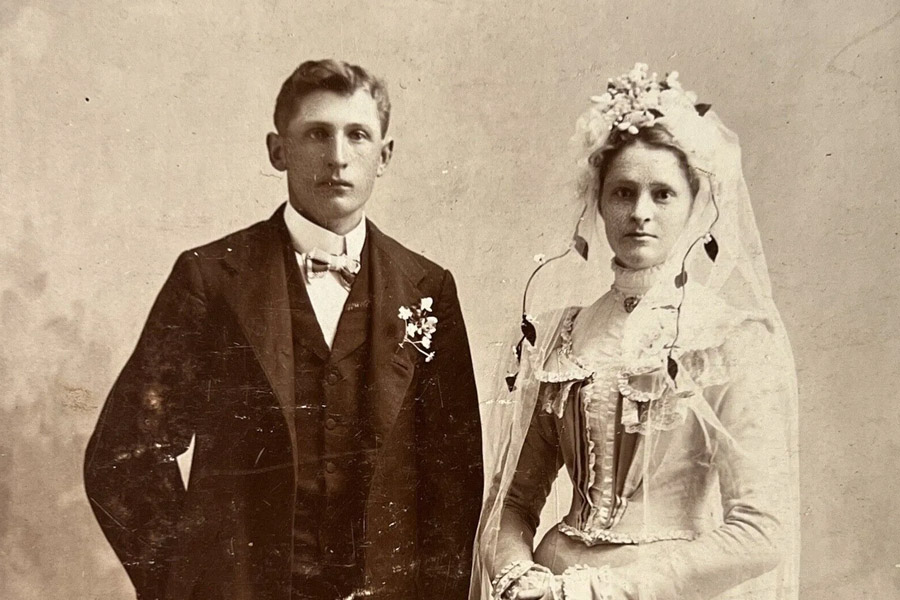
Magna is primarily known for her relationship with Virgil Earp. They met in Pella, Iowa, when they were young and motivated. Their families opposed the marriage. Elopement was likely due to significant opposition. Some reports say February 1860, others 21 September 1861. Though the date is unclear, the story is obvious. They picked each other against opposition.
One kid, Nellie Jane Earp, was born on 7 January 1862 in the most common report. Nellie was Magdalena’s main link to the Earp family. I picture her as a bridge child, born in uncertainty, carrying her mother’s stability and father’s name.
Virgil’s marriage ended sooner than young couples want. The Civil War drove men away, circulated rumor faster than reality, and made absence practically permanent. Virgil perished in war, Magdalena was told. Her life alters emotionally because of that. Not only was she abandoned by history. She was told, believed, and continued.
A Second Life in the West
After Virgil was reported dead, Magdalena married again around 1864. Her second husband is recorded as John Van Rossum or Van Rossem. The spelling varies, which is common in records from the era, especially when names moved across languages and clerks wrote them as they heard them. This marriage marked another turn in her life, another effort to build security out of uncertainty.
Sources suggest that Magdalena and John had a son, Arie or Arie G. Van Rossum, though the record is not completely settled. Even that uncertainty feels historically honest. Many women of the nineteenth century left only partial imprints in official records. Their lives were lived in kitchens, on trails, in cabins, in labor, in childbearing, and in endurance. The archive often catches only the edges.
By 1867, Magdalena had married a third time, to Thomas Eaton, in Walla Walla County, Washington Territory. That marriage seems to have produced four more children. Their names are not consistently preserved in the material I reviewed, which tells me something important about the age she lived in. Men are often remembered in the language of public action. Women are often remembered in relation to births, marriages, and deaths. Yet those family roles are not small roles. They are architecture. They built whole households and often held them together when everything else was slipping.
Nellie Jane Earp and the Next Generation
If Magdalena’s life had a beating heart in the record, it is Nellie Jane Earp. Born in 1862, Nellie carried the first Earp connection forward even as her mother’s life moved into a different family line. Nellie later married Levi B. Law. Their children included Maud, Eileen, and George P. Law. Later, Nellie married Louis David Bohn, and some family accounts add another daughter, Elva Irene Bohn.
I find Nellie especially important because she links two worlds. On one side is the famous, volatile Earp family story. On the other is the quieter but equally significant story of Magdalena, a Dutch immigrant mother whose life was shaped by migration, separation, and remarriage. Through Nellie, Magdalena’s history did not vanish. It multiplied.
Virgil Earp’s Return and the Strange Shape of Reunion
The Portland reunion with Virgil Earp decades later is a highlight in Magdalena’s story. Virgil found Magdalena and Nellie in Oregon in the late 1890s. In 1898, he visited them and met his unknown grandchildren. That sight has odd gravity. Not a clean reunion. The meeting occurs after battle, rumor, separation, and the long stillness of changed lives.
I imagine two rivers meeting after many miles. The same family water has various mineral hues from each channel. Magdalena had three marriages and moved across the American West by then. Frontier history shaped Virgil’s public life. Their reunion illustrates that personal history can outlast formal history.
Death, Burial, and Historical Memory
Magdalena died on 3 May 1910 in Cornelius, Washington County, Oregon. She was buried at River View Cemetery in Portland. That burial place matters because it anchors her in a specific landscape. The woman who began life in Utrecht and passed through Iowa, the West, and three marriages ended her days in Oregon. Her life was a map drawn in migration.
I do not think her story is only about being Virgil Earp’s spouse. That relationship is important, yes, but it is not the whole story. She was a mother, a daughter, a sibling, an immigrant, a remarried woman, and a survivor of uncertainty. Her life was not a straight road. It was more like a braided trail cut through woods and weather, visible in places, hidden in others, but always moving forward.
Family Members at a Glance
| Family Member | Relationship to Magdalena | Notes |
|---|---|---|
| Gerrit Rysdam | Father | Named in genealogical records |
| Magdalena Catrina Van Velzen | Mother | Named in genealogical records |
| Adriana Johanna Magdalena Rysdam | Sister | Listed in family records |
| Egidius Johannes “Gid” Rysdam | Brother | Listed in family records |
| Elizabeth J. Rysdam | Sister | Listed in family records |
| Neeltje Rysdam | Sister | Listed in family records |
| Gerrit Rysdam | Brother | Listed in family records |
| Wynanda Gerarda Elisabetha Rysdam | Sister | Listed in family records |
| Virgil Earp | First husband | Eloped with Magdalena |
| Nellie Jane Earp | Daughter | Born in 1862 |
| John Van Rossum or Van Rossem | Second husband | Marriage after Virgil was believed dead |
| Arie G. Van Rossum | Possible son | Mentioned in some family accounts |
| Thomas Eaton | Third husband | Married in 1867 |
| Four additional children | Children with Thomas Eaton | Names not consistently preserved |
FAQ
Who was Magdalena Rysdam?
Magdalena Rysdam was a Dutch-born woman whose life crossed from Utrecht to Iowa and then into the American West. She is most often remembered as the first wife of Virgil Earp, but her own story includes migration, motherhood, remarriage, and a long family legacy.
Was Magdalena Rysdam only connected to Virgil Earp?
No. That connection is the most famous part of her life, but she also had her own family background, her own children, and two later marriages. She lived through multiple households and raised children across different family lines.
How many children did Magdalena Rysdam have?
She had at least one child with Virgil Earp, Nellie Jane Earp. Records also indicate that she may have had one son with John Van Rossum or Van Rossem and four children with Thomas Eaton, making her a mother of a large blended family.
Where did Magdalena Rysdam live later in life?
After living in Iowa and moving west, she spent her later years in Oregon. She died in Cornelius, Oregon, in 1910 and was buried in Portland.
Why does Magdalena Rysdam matter in family history?
She matters because her life connects immigration, frontier settlement, Civil War disruption, remarriage, and the Earp family story. She is a reminder that historical families are built not only by famous men, but also by women who endured upheaval and carried the family line forward.