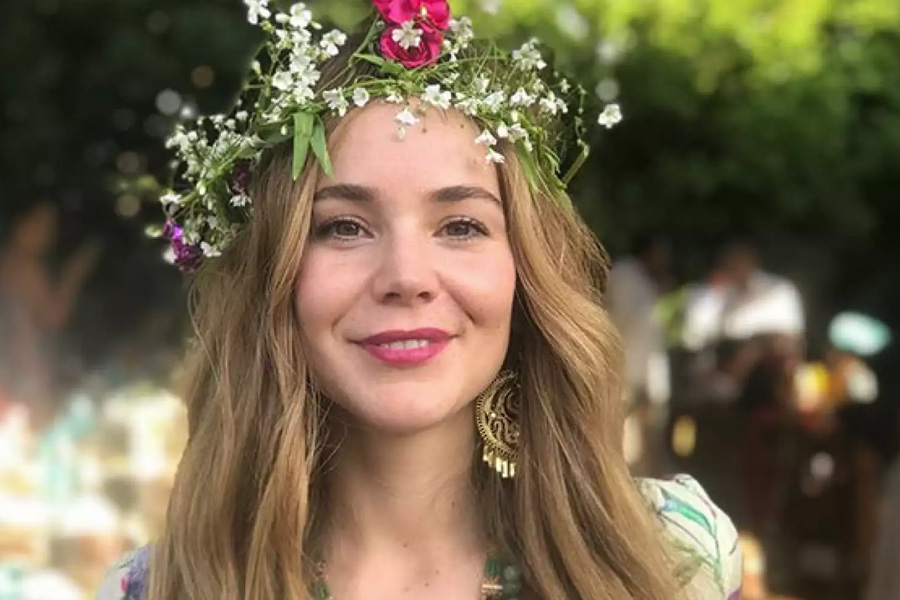
A Private Luminosity
I find myself drawn to people who live just outside the blinding cone of fame, those whose light is softer yet steady. Marina Sodi is one of those people. She grew up in a family that practically hums with artistic and intellectual energy, yet she has cultivated a life that feels intimate and grounded. Born in Mexico City around 1987 or 1988, she is the younger daughter of journalist and historian Ernestina Sodi and attorney Fernando González Parra. In the shadows and glow of a celebrated clan, Marina chose a path shaped by art and anthropology, by observation and imagination.
Her self-described identity as an anthropologist honoris causa and plastic artist is more than a clever phrase. It feels like a lens through which she moves in the world, documenting echoes of culture while shaping images and artifacts that speak quietly, then linger. On Instagram, where she posts as @_matriarca_, Marina shares moments that mix personal travel, visual studies, flashes of family life, and the textures of everyday beauty. The platform becomes a sketchbook, the audience a circle of trusted onlookers. She seems to prefer presence over performance.
Family Ties Across Arts and Law
To understand Marina is to acknowledge the powerful gravity of the Sodi family. The roots of the clan stretch back to historical and political figures like Carlos Sodi, while modern branches grow toward entertainment, academia, and media. Her mother, Ernestina Sodi, was a public intellectual in the true sense, someone who bridged aesthetics, journalism, and history, and who wrote about the darker corners of life with clarity and courage. Ernestina’s passing in November 2024 left a gentle silence in the family and a deep imprint in Marina’s recent public reflections.
Marina’s father, Fernando González Parra, works in law and has kept a quieter profile than the artists of the family. Her sister, the actress and model Camila Sodi, has had a high visibility career in film and television. The extended circle includes an aunt whose name needs no introduction in the Spanish speaking world. Ariadna Thalía Sodi, better known simply as Thalía, is a global icon whose music and on-screen presence helped define a generation of Latin pop. There is also the half-aunt Laura Zapata, a veteran actress whose own story is intertwined with both triumphs and painful public moments. Other aunts, Gabriela and Federica Sodi, add their own artistic strands to the family fabric.
The younger generation expands that creative lineage. Marina’s half-sisters, Naian González Norvind and Tessa Ía, are known for acting and music within Mexico’s vibrant arts scene. Family gatherings therefore resemble cross currents of performance and scholarship, a chorus of voices where intellect meets craft, and where expressive work is encouraged as a vital part of identity.
Art, Anthropology, and the Life She Curates
If the family’s legacy casts a bright light, Marina seems to tilt her face to the side and catch it at an angle. I see in her work the instincts of an ethnographer and the hand of a visual poet. She claims anthropology not as a degree but as a mode of living. She watches and listens, she samples textures and scenes, then reshapes them into visual expressions. She treats Instagram as a space for collage and curatorial choice, revealing her tastes piece by piece. There are voyages to coastal cities, playful experiments with color and form, and candid notes on family closeness.
She is associated with a project called @kunares, which appears to involve art or cultural practice. The tone of her social presence is intimate but confident. It suggests a creative personality rooted in heritage but keen to push toward self defined expression. No boisterous claims, no grand announcements. Instead, a steady trickle of images and ideas that build into something whole.
Grace Amid Storms
Families have seasons. The Sodis have weathered sunlight and shadow. Marina’s mother Ernestina had a life marked by both achievement and intense hardship. The 2002 kidnapping of Ernestina and her half-sister Laura Zapata stands out as a traumatic episode that entered public discourse and family memory. Years later, Ernestina’s final hospitalization and passing became a moment of shared grief. During that crisis, Marina’s voice felt composed and purposeful. She posted updates, gathered family, and appeared as a protective figure for those around her, including her sister Camila’s children.
That posture reveals something fundamental about Marina. She is not simply an artist or a daughter within a famous clan. She is a person who steps forward at decisive times with care and clarity. In public, she remains measured. In private, she seems deeply present. Loss and resilience are part of her cadence. The grace of her response speaks loudly without asking for attention.
Public Glimpses Without Spotlight
It is easy to forget she is not a celebrity in the conventional sense. Marina has become visible in media mostly through family proximity, occasional resemblance to her aunt Thalía, and rare moments when the family story rises into news. Even her 2019 divorce unfolded as a gentle footnote rather than a scandal. An amicable split, acknowledged with a lighthearted social post, felt like a quiet declaration of autonomy and goodwill.
Her public persona thrives on understatement. She cultivates a modest following, around the tens of thousands, and shares her visual work without the burden of fame. There is a dignity in that choice. For some, the stage is inevitable. For Marina, the gallery feels more fitting. Less spotlight, more space to breathe.
A Living Timeline
The outline of Marina’s life reads like an intimate ledger, marked by family milestones and personal evolution.
- Late 1980s. Born in Mexico City into a household where journalism, aesthetics, and law cross paths.
- 1990s. Early years colored by her mother’s work and the quiet stability of her father’s profession.
-
- The family faces the stark reality of trauma with the kidnapping of Ernestina and Laura, an event that will later be studied and chronicled.
- Late 2000s and 2010s. Camila builds a career in acting and modeling. Marina deepens her artistic practice, studies culture, and refines the eye she brings to images and everyday rituals.
-
- An amicable divorce, publicly acknowledged without drama, serves as a personal reset and an emblem of mature closure.
- 2020s. Marina continues to post creatively across social platforms, keeps family closely knit, and navigates the profound loss of her mother.
In these chapters, Marina’s narrative is less about fame and more about cultivating a meaningful life in the company of people she loves, with art as a companion.
FAQ
Who is Marina Sodi?
Marina Sodi is a Mexican anthropologist and visual artist known for a private, creative life within a very public family. She is the younger daughter of journalist and historian Ernestina Sodi and attorney Fernando González Parra, and the niece of global singer and actress Thalía.
How does Marina relate to the Sodi family legacy?
She inhabits the legacy without chasing the spotlight. Her mother Ernestina worked at the intersection of aesthetics, journalism, and history. Her sister Camila is an actress and model. Her aunts include Thalía, Laura Zapata, Gabriela, and Federica, all figures in Mexican arts and media. Marina leans toward visual storytelling and cultural observation, using art and anthropology as her personal compass.
What does she share on social media?
Marina shares a blend of travel, art, family glimpses, and personal reflections. Her Instagram feels like a curated diary, where images act as notes on culture, mood, and place. She favors intimacy over spectacle.
Is Marina a public celebrity?
Not in the usual sense. She is known primarily through family connections and her own artistic profile. Her visibility peaks during family milestones or events, yet she consistently chooses a low key presence focused on creative work.
What are her interests and professional focus?
She identifies as an anthropologist honoris causa and a plastic artist. Her work gravitates toward cultural textures and visual creation, often showcased online. She is linked with a project called @kunares that appears to involve art or cultural practice.
What do we know about her personal life?
Marina values privacy. In 2019 she announced an amicable divorce, a rare public note on her relationships. Since then, her social posts emphasize artistic pursuits and family support, particularly around her mother’s final illness and passing.
Does she have children?
There is no public indication that she has children. She is close with her sister Camila’s children and seems deeply involved with family.
What is Marina’s relationship to Thalía?
Thalía is her aunt. Media sometimes highlights their resemblance, especially around family events, but Marina maintains her own identity and focus.
Did family tragedies affect her public role?
Yes. The 2002 kidnapping of her mother and half-aunt entered family history as a defining trauma. In 2024, during her mother’s hospitalization and death, Marina spoke publicly with composure and care. These moments brought attention to her, but she remained measured and respectful.
Is her net worth known?
No. There are no reliable public figures for Marina’s net worth. She is not a celebrity in financial reporting terms, and she keeps her private affairs discreet.
What makes Marina’s story compelling?
She embodies quiet resilience and creative dedication. In a family of bright lights, she adapts the glow for her own canvas, moving through life like a careful ethnographer who paints as she observes. Her story is a reminder that artistry can thrive beyond the marquee, where attention is earned by authenticity rather than volume.