Early Life and Origins
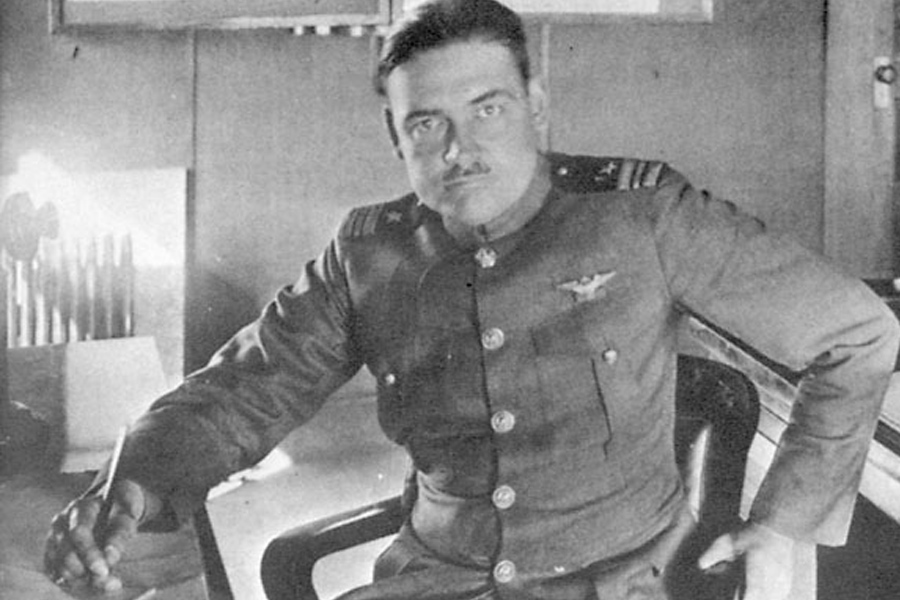
When I trace the outline of Earl Winfield Spencer Jr., I see a boy from the prairie who grew into the cockpit of history. He was born on 20 September 1888 in Kinsley, Kansas, a town that knew more about grain and wind than wings and steel. His father, Earl Winfield Spencer Sr., was a Chicago stockbroker, the sort who lived amid ledgers and tickers. His mother, Agnes Lucy Marian Hughes, came from the Channel Islands, a transatlantic thread woven into a Midwestern tapestry. The family gravitated toward the Chicago area, and the children grew up within reach of Lake Michigan, where horizons feel wide and restless. In that restlessness, I can almost hear Win’s calling.
A Family Map
The Spencer household held more than one future. Win had several siblings, each a point on the family compass. Egbert Hughes Spencer, a younger brother, shared the cadence of a name that stitched Hughes to Spencer and England to America. Sisters Gladys Mary and Ethel M. Spencer marked the domestic center, the kind of siblings whose lives are traced more by family gatherings than headlines. Frederick Lionel Spencer, born toward the end of the century, carried the family line forward. I picture their dinners noisy and lit with promise, a map of futures folded on the table.
Annapolis and the Making of a Naval Aviator
Earl Spencer took the straightest road to responsibility and risk. He entered the U.S. Naval Academy and graduated with the class of 1910, a cohort that would soon confront a world remade by war and machines. He embraced the new art of flying, when pilots were still half scientist and half daredevil. By 1917, as the United States accelerated into World War I, Spencer was ordered to San Diego to help transform North Island into a permanent naval air station. He became the station’s first commanding officer. It is not a small thing to stand atop virgin ground and call it a flight line. He helped form the culture and cadence of naval aviation on the West Coast, a legacy that carried through decades of flight training and wartime operations.
Wallis Warfield and a Marriage in the Spotlight
History remembers him for the woman he first married as much as for the airfields he commanded. In November 1916, in Baltimore, Spencer wed Bessie Wallis Warfield. The marriage produced no children. It unraveled across the next decade, a tangle of separations and reconciliations, the sort of story that gets told both around dinner tables and in courtrooms. Accounts of the time and later biographies describe heavy drinking and allegations of abuse that made the relationship untenable. Their divorce was final in 1927. Wallis would go on to marry Ernest Simpson, then the man who abdicated the British throne. Spencer’s life, aligned for a time with the trajectory of a future duchess, veered away toward a more private turbulence.
Later Marriages and the Extended Family
Not done with marriage. Spencer married Miriam, sometimes known as Mariam J. Caro or Miriam Ham, in 1928. She had previously married Albert C. Maze. He was stepfather of Marine Corps commander Robert Claude Maze Sr., who died in war in 1945. That connection suggests this family’s ring of duty encompassed multiple lives.
In 1937 Spencer married Norma Reese Johnson, a widow with two daughters, Betty L. Johnson and Kathryne Johnson. The marriage burned fast. Newspaper accounts of the time tracked their 1937 wedding and then a separation around 1940, followed by divorce the same year. Alcohol and incompatibility have a way of whispering the same endings.
He married again in 1941, to Lillian Phillips. She remained his wife through the final stretch of his life, and she survived him. I imagine a later chapter that was quieter, steadier, a harbor after years at sea.
Command, Rank, and Recognition
Spencer’s career moved in concert with the maturation of naval aviation. He rose to the rank of Commander and is most closely tied to the formative years of the North Island base at San Diego. The dates fall into tidy lines. Naval Academy graduation in 1910. Early designation as a naval aviator around the mid 1910s. San Diego command in 1917, when aviation still felt like alchemy with propellers. His service is commonly listed through 1939, when he stepped back from active duty. Several accounts note that he was made a Knight of the Order of the Crown of Italy in 1936, a small European ribbon beside an American uniform. There is a quiet pride in such a detail, even if it sits on the shelf rather than in the logbook.
The Man Behind the Uniform
I try to hold the paradox without forcing it to resolve. On one hand, the pioneering officer who built a base and trained aviators. On the other, the husband whose relationships faltered in public and private. He could be both. He likely was. The sky shows no favoritism. It holds the glide of genius and the stall of error at the same altitude. Spencer’s life reflects that truth. Innovations and achievements do not shield a person from their own weather.
Final Years and Resting Place
By the late 1930s Spencer’s naval service was behind him, his name written into the early chapters of San Diego’s aviation story. He died on 29 May 1950 in Coronado, California, within sight of the water that had defined his career. He was laid to rest at Fort Rosecrans National Cemetery. The headstones there sit in rows like wings, quiet and aligned. I picture his name in that ordered field, the air above it bright and salt heavy.
Why He Still Matters
Earl Winfield Spencer Jr. occupies a slender but important column in American naval history. He belongs to that first generation who learned to trust wood, fabric, and later metal at sea. He also stands as a reminder that public achievement and private struggle can exist in the same person without canceling each other. His life touched the early development of naval aviation. It touched the story of a duchess and a king. It touched the sacrifices of a stepson who never came home. The pattern is complex, the fabric strong.
Timeline Highlights
- 1888: Born in Kinsley, Kansas, to Earl Winfield Spencer Sr. and Agnes Lucy Marian Hughes.
- 1910: Graduated from the U.S. Naval Academy.
- 1916: Married Bessie Wallis Warfield in Baltimore.
- 1917: Ordered to San Diego and became the first commanding officer of the naval air station at North Island.
- 1927: Divorced from Wallis.
- 1928: Married Miriam, gaining a stepson, Robert Claude Maze Sr.
- 1937: Married Norma Reese Johnson.
- 1940: Separated and divorced from Norma.
- 1941: Married Lillian Phillips.
- 1950: Died in Coronado, California, and was buried at Fort Rosecrans National Cemetery.
FAQ
Did Earl Winfield Spencer Jr. really command the air station at North Island first?
Yes. During World War I he was ordered to San Diego to set up the permanent naval air training station at North Island and is credited as its first commanding officer. That role anchored his reputation as a pioneer of U.S. naval aviation on the Pacific coast.
How many times did he marry?
He married four times. His first marriage was to Bessie Wallis Warfield in 1916. He later married Miriam, then Norma Reese Johnson, and finally Lillian Phillips in 1941. The later marriages brought stepchildren into his life.
Did he have any children of his own?
No. There are no records of biological children from any of his marriages. He did, however, have stepchildren through his marriages to Miriam and to Norma.
Who were his parents and siblings?
His father was Earl Winfield Spencer Sr., a Chicago stockbroker, and his mother was Agnes Lucy Marian Hughes, originally from the Channel Islands. His siblings included Egbert Hughes Spencer, Gladys Mary Spencer, Ethel M. Spencer, and Frederick Lionel Spencer.
How is he connected to Wallis Simpson and the British monarchy?
Spencer was the first husband of Bessie Wallis Warfield, who later became known as Wallis Simpson. After their 1927 divorce, she married Ernest Simpson and later married Edward VIII, who abdicated the British throne. Through that former marriage, Spencer’s name appears in many histories of the abdication crisis.
What rank did he achieve, and when did he leave the Navy?
He rose to the rank of Commander. His service is commonly listed from 1910, the year of his Naval Academy graduation, through 1939, when he left active duty.
Is it true that he received an Italian honor?
Several accounts state that he was made a Knight of the Order of the Crown of Italy in 1936. That detail appears in biographical summaries of his life and is often mentioned alongside his naval career.
Where is he buried?
He is buried at Fort Rosecrans National Cemetery, which overlooks San Diego Bay. It is a fitting resting place for a naval aviator, a place where land, sea, and sky almost touch.
What became of his stepson, Robert Claude Maze Sr.?
Robert Claude Maze Sr., the son of Spencer’s second wife Miriam from a previous marriage, served as a Marine Corps officer and was killed in action in 1945. His story adds another thread of service and sacrifice to the wider family narrative.
Why should we remember Earl Winfield Spencer Jr. today?
Because he stood at the genesis of naval aviation on the West Coast, because his life illustrates the mix of courage and contradiction that defines many pioneers, and because his path intersected with events and people who reshaped the twentieth century.