A life at the heart of music
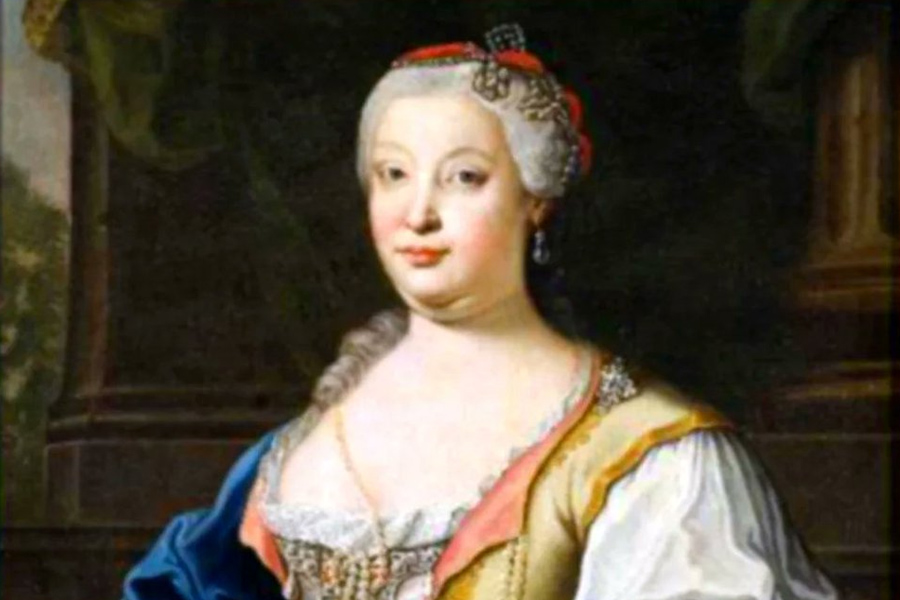
I picture Maria Barbara Bach standing at the quiet center of a moving household, a figure who never sought the spotlight yet shaped the life and work of one of history’s greatest composers. Born 20 October 1684 in Gehren, Thuringia, according to the Old Style calendar, and buried 7 July 1720 in Köthen, she was the first wife of Johann Sebastian Bach. Her life traces a delicate arc from the close knit Bach clan, through marriage, motherhood, and court life, to a sudden and still mysterious end.
She has often been described as a singer and certainly grew up steeped in music. But if she sang, the public record is light on details. What we can say with confidence is that she was part of a family that breathed in counterpoint and exhaled chorales, and that her presence anchored Bach’s early years as he forged his path from Arnstadt to Mühlhausen to Weimar and then to Köthen.
Roots and kinship
Maria Barbara was a daughter of Johann Michael Bach, organist and town scribe at Gehren, and Catharina, sometimes recorded as Wedemann or Wedermann. The family belonged to the sprawling Bach network, where cousins and uncles shared music, apprenticeships, and reputations. After her mother died in 1704, Maria Barbara lived with relatives in Arnstadt, a move that placed her in the orbit of the young Johann Sebastian, then serving as organist and finding his voice amid youthful missteps and flashes of genius.
She is also recorded with an older sister, Barbara Catherina, a name that surfaces in family notes linked to Arnstadt. The web of Bachs is so dense that lineages feel like braided strings, a set of ties that bind towns, choirs, and churches.
Marriage and a household in motion
On 17 October 1707 Maria Barbara married Johann Sebastian Bach in Dornheim, near Arnstadt and Mühlhausen. I imagine the ceremony plain but resonant, the vows set against a steady organ’s tone. From that day, she stood beside a husband whose life would be measured in cantatas and court obligations, rehearsals and travel, ink stains and late night copying.
Their household was mobile and industrious. In Mühlhausen they settled into a rhythm of parish and composition. In Weimar they navigated court schedules. In Köthen they entered a secular court that prized instrumental music. Through it all, Maria Barbara managed the home, bore children, and helped keep the gears of family life turning in the background while Bach’s fame and responsibilities grew.
Children and their paths
Seven children were born to Maria Barbara and Johann Sebastian Bach. Three died in infancy, a sorrow all too common in their era. Four survived to adulthood and carried forward the Bach name.
- Catharina Dorothea was born 28 December 1708 and died 14 January 1774. Her life stood mostly outside the stage lights, yet she was part of the family’s working chorus.
- Wilhelm Friedemann, born 22 November 1710 and died 1 July 1784, became a brilliant and mercurial organist and composer, his career marked by flashes of brilliance and a restive temperament.
- The twins Johann Christoph and Maria Sophia were born 23 February 1713. Johann Christoph died the same day. Maria Sophia died 15 March 1713.
- One of the century’s most acclaimed composers, Carl Philipp Emanuel, born 8 March 1714 and died 14 December 1788, combined Baroque rigor and Empfindsamkeit with a nerve-bare manner.
- Johann Gottfried Bernhard, born 11 May 1715 and died 27 May 1739, served in church music posts, a capable musician who did not reach the heights of his brothers.
- Leopold Augustus, born 15 November 1718 and died 29 September 1719, was lost in infancy.
These names form a constellation around Maria Barbara. I see her with a child at the clavichord, another humming a cantata theme, a basket of linens at her side, a rhythm of family life that testifies to quiet strength.
Köthen years and sudden loss
In 1717 the family moved to Köthen when Bach accepted a position at Prince Leopold’s court. This marked a pivot into instrumental composition and ensemble leadership. Then, in July 1720, while Bach was away at Carlsbad with the prince, Maria Barbara died without recorded cause. She had been buried 7 July by the time Bach returned.
That absence at the moment of her burial haunts the narrative. The archive offers little beyond dates. What remains is a sense of rupture and the image of a widower returning to a house where the center had gone still.
Aftermath and the household’s second act
Johann Sebastian Bach married young court vocalist Anna Magdalena Wilcke 17 months after her burial. Anna Magdalena stepmothered Maria Barbara’s children and had more with Bach. Copying, rehearsal, teaching, and devotions continued at home. Her children and stability through migrations, births, and the difficult schedule as a court musician carried Maria Barbara’s legacy in that bustle.
Interpreting traces
A long standing idea in Bach lore suggests that the Chaconne from the Violin Partita in D minor might be a tombeau for Maria Barbara, a memorial in music. The thought is enticing. The Chaconne feels like carved oak set into motion, grief coiled and uncoiling, a dance of sorrow and defiance. Yet scholars disagree about this interpretation. No decisive document proves intent. I can hear the possibility and its resonance, but I also keep the line between inference and record clear.
Timeline highlights
- 20 October 1684 birth in Gehren, Thuringia, Old Style calendar.
- 1704 death of her mother, move to Arnstadt to live with relatives.
- 1703 to 1707 Johann Sebastian Bach’s service in Arnstadt, likely period of acquaintance.
- 17 October 1707 marriage to Johann Sebastian Bach in Dornheim.
- 1708 to 1719 births of seven children, three not surviving infancy.
- 1717 move to Köthen with Bach’s court appointment.
- July 1720 death in Köthen during Bach’s absence, burial on 7 July.
- 1721 Johann Sebastian Bach marries Anna Magdalena Wilcke, who helps raise Maria Barbara’s surviving children.
Family overview
Maria Barbara’s parentage anchors her in the Bach lineage. Her father, Johann Michael Bach, was both organist and town scribe, a trusted figure in Gehren’s civic and musical life. Her mother, Catharina, gave the family its home’s gentler contours. With an older sister, Barbara Catherina, and a swarm of cousins and uncles active in music, Maria Barbara’s world blended family and craft.
Her marriage gave her a household laden with manuscripts and melody. Through Catharina Dorothea, Wilhelm Friedemann, Carl Philipp Emanuel, and Johann Gottfried Bernhard, her legacy extended into the next generation. After her death, Anna Magdalena became a steady presence who folded Maria Barbara’s children into her care. In this chain of kinship, Maria Barbara occupies the early, pivotal link that holds both lineage and art in balance.
The quiet power behind the work
There is a kind of architecture to Maria Barbara’s life. She supplied solidity and routine. She kept a hearth-lit world where pens could scratch out parts, where practice could be a family ritual, where grief could be absorbed and faith could be held. Bach wrote for courts and churches, for God and for the challenge of invention. He also wrote within a domestic sphere that needed food, order, and an inner tempo. The quiet power of Maria Barbara’s presence shaped that sphere.
FAQ
Was Maria Barbara Bach a professional singer
Some descriptions call her a singer, likely shaped by her family’s musical environment. There is no detailed record of a public career. She seems not to have been a featured performer at court, but she lived in a household where music was daily bread.
How many children did she have
She and Johann Sebastian Bach had seven children. Four survived to adulthood. The children were Catharina Dorothea, Wilhelm Friedemann, twins Johann Christoph and Maria Sophia, Carl Philipp Emanuel, Johann Gottfried Bernhard, and Leopold Augustus.
When and where was she born
She was born on 20 October 1684 in Gehren, Thuringia. The date is given in the Old Style calendar used at the time.
When did she marry Johann Sebastian Bach
She married him on 17 October 1707 in Dornheim, near Arnstadt and Mühlhausen.
What was the cause of her death
The cause of death was not recorded in contemporary documents. She died in Köthen in July 1720 and was buried on 7 July.
Is the Chaconne from Bach’s Violin Partita a memorial to her
Some have proposed that the Chaconne was conceived as a tombeau for Maria Barbara. It is an evocative idea, but it remains a hypothesis. The debate continues without firm documentary proof.
Who raised her children after she died
After her death, Johann Sebastian Bach married Anna Magdalena Wilcke in 1721. Anna Magdalena became stepmother to Maria Barbara’s surviving children and played a central role in the household.
Who were her parents
Her father was Johann Michael Bach, organist and town scribe in Gehren. Her mother was Catharina, sometimes recorded with the surname Wedemann or Wedermann.
Did any of her children become famous composers
Yes. Wilhelm Friedemann and especially Carl Philipp Emanuel became prominent composers and performers. Their work helped carry the Bach family’s musical influence into the next generation.