A Name in Two Worlds
When I set out to write about Wesley Dale Smith, I quickly realized that his name sits at the crossroads of multiple public records and personalities. Names can be mirrors. They reflect more than one life when the world is vast and archives are direct. In this portrait, I focus on the Wesley who lived within the classical tradition, the professor often referred to publicly as Wesley D. Smith, who taught at Princeton and the University of Pennsylvania, and who shared a home life with actress Lois Smith and their daughter, Moon Elizabeth. His story is a blend of scholarship and family, of Greek and Roman letters alongside performances under the stage lights.
Early Years and Academic Ascent
I picture his beginnings as a scholar in the early 1950s, a young man reading Greek and Latin like a composer reading music. He completed his undergraduate work in Greek and Latin at the University of Washington in 1951. His eyes were set on deeper waters. He continued at Harvard for his graduate training, earning an MA and then a PhD in the classics. The path from promising student to teacher is often a quiet crossing, yet it changes everything. He began teaching at Princeton in the mid 1950s, then joined the faculty at the University of Pennsylvania in 1961. There he stewarded graduate studies, served as an ombudsman, and devoted himself to the literature and medical writings of the ancient world.
His scholarly interests converged on the Hippocratic corpus and the texture of classical thought. In 1972 he was recognized with a Guggenheim Fellowship. That is the kind of honor that marks a scholar not just for productivity but for promise and depth. Later, in 1979, he published work on the Hippocratic tradition, an enduring contribution for students of ancient medicine and philosophy. He retired in 1996 and was named emeritus, stepping back from daily campus rhythms yet remaining part of the intellectual fabric he had helped weave.
Marriage to Lois Smith and the Birth of Moon Elizabeth
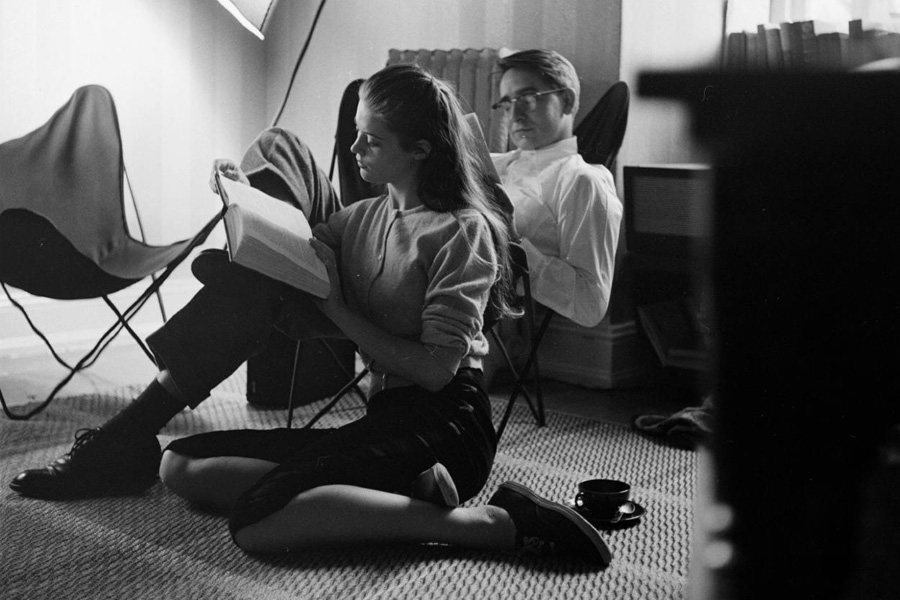
Alongside lectures and seminars, there was a personal narrative with its own cadence. As I followed the threads of his life, one stood out. He married Lois Smith when she was eighteen, around 1948. Lois, born Lois Arlene Humbert, would become one of the most respected American actresses of her generation, known for both luminous stage work and nuanced film and television roles. Together they welcomed a daughter, Moon Elizabeth Smith, born in early 1958. The image of that household fascinates me. A classicist translating the wisdom of ancient physicians while an actress distills human emotion into performance. Two crafts that turn life into language.
The marriage eventually ended. Public biographies list their divorce in 1970. I do not imagine that as a fault line but as a transformation. People shift, careers evolve, and paths bifurcate. Yet the shared chapter matters. It sets the stage for Moon Elizabeth, who remains a private person by choice and circumstance, mentioned in her mother’s biographies but otherwise largely outside the public spotlight.
A Second Chapter with Karen Faulkner and a Growing Family
In later years Wesley married Karen Faulkner. The domestic constellation changed shape. With Karen he shared a son, Anthony Smith, and welcomed a stepson, Josh Olson. Grandchildren filled out the family. Five are listed among survivors, and though their names are private, their presence in that closing roll call speaks to a life that touched multiple generations. I think of family as a slow river. You may not hear it from the road, but it is moving with purpose, carrying stories along with the stones.
Scholarship as Craft
To understand Wesley’s work, I return to the feel of it. A classicist is a builder of bridges between centuries. He read the Hippocratic writings not as relics but as living artifacts, texts that show how ancient thinkers made sense of bodies, illness, and the ethics of care. The craft here is interpretive, investigative, and incredibly patient. Teaching at Princeton and Penn meant guiding students through ancient languages and the myths that inform modern narratives. Serving as graduate chair requires diplomacy and generosity. Acting as an ombudsman calls for listening with precision. These roles tell me he had an ethos of stewardship, a sense that institutions, like texts, need careful tending.
The Final Years
Retirement in 1996 granted space to reflect. He passed away in 2018 at the age of 88. The final years of a scholar often include revisiting drafts, rereading favorite passages, and staying in touch with former students who carry the work forward. Even the quiet becomes a form of continuing legacy. When a classicist leaves the stage, his contributions linger in footnotes and syllabi, in the half-remembered lines of Homer or the clinical clarity of Hippocratic advice.
A Clarifying Note on Names
Because I am writing about a person whose name appears in disparate public records, a note is warranted. There are other individuals named Wesley Dale Smith who are distinct and unrelated to this account. This profile concerns the professor of classics associated with Princeton and the University of Pennsylvania, the one connected to Lois Smith and their daughter Moon Elizabeth. Names can echo through archives. The task is to keep the right echo in view.
FAQ
Who was Wesley Dale Smith in academia?
He was a classicist whose work centered on Greek and Roman literature, with particular attention to the Hippocratic tradition. He completed undergraduate studies in Greek and Latin, earned graduate degrees at Harvard, taught at Princeton, and joined the University of Pennsylvania in the early 1960s, later serving as graduate chair and ombudsman. He retired in 1996 and was named emeritus.
How did his marriage to Lois Smith shape his story?
It placed his scholarly life alongside a vibrant world of performance. Lois Smith, an acclaimed actress, married him when she was eighteen. Their partnership brought together art and scholarship, and their daughter Moon Elizabeth added to the narrative. Even after their divorce, that early chapter remains integral to his family story.
Did Wesley publish significant works?
Yes. His contributions include widely noted scholarship on the Hippocratic writings. The work is part of a broader engagement with classical texts that explore medicine, ethics, and the ways ancient thought informs modern understanding.
Who are his immediate family members?
His immediate family includes his former spouse, actress Lois Smith, and their daughter, Moon Elizabeth Smith. In his later marriage to Karen Faulkner, he had a son, Anthony Smith, and a stepson, Josh Olson. Five grandchildren are also listed among his survivors.
What roles did he hold at the University of Pennsylvania?
He served as a professor of classics, chaired graduate studies, and acted as an ombudsman. These roles required scholarly leadership, mentorship, and institutional care, reflecting both his academic expertise and his commitment to community.
Is there confusion about others with the same name?
Yes. The name Wesley Dale Smith appears in different public records that refer to distinct individuals. This profile focuses on the classicist and educator connected to Princeton and the University of Pennsylvania, and to family members such as Lois Smith and Moon Elizabeth.
What is known about Moon Elizabeth Smith today?
Public information is limited. She is noted in biographies as the daughter of Lois Smith and Wesley Dale Smith, but she maintains a private life and does not have an extensive public profile.
When did Wesley die?
He died in 2018 at the age of 88. His career and family legacy remain part of the memory of students, colleagues, and descendants who continue to reflect the measure of his life.