Origins and the Birth of La Españolita
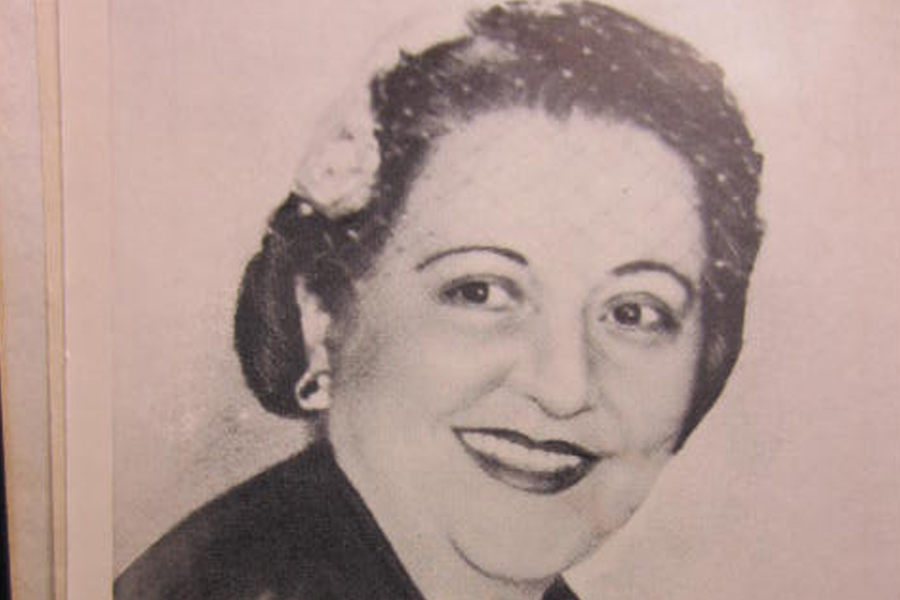
I picture a young woman in Santo Domingo at the turn of the century, Spanish by blood yet Dominican by soil, moving through a city that would later be renamed for her husband. Maria Martinez De Trujillo, known as La Españolita, likely entered the world on August 26, 1899. Records from that era are fogged by censorship and mythmaking, so other dates appear in some accounts, but 1899 aligns best with the rest of her life’s timeline. Her parents were Spanish immigrants, Francisco de Paula Sebastián Manuel Antonio Agustín María de la Paz del Corazón de Jesús Martínez de Peña and Sebastiana de los Dolores Alba Martínez, whose names echo a world of devotions and family pride. She grew up with a sister, Francisca, in a modest household that kept European customs alive in the Caribbean heat.
What I find striking is how little we know about Maria before she steps into the cyclone of power. Her early education and interests are not recorded in detail. She emerges in the public eye only when her life intersects with Rafael Leónidas Trujillo Molina, the man who would define an era.
An Affair That Reshaped a Nation
The late 1920s were decisive. Maria met Trujillo while he was married to Bienvenida Ricardo. The two began an affair that would alter the course of Dominican history. Their son, Rafael Leónidas Ramfis Trujillo Martínez, was born on June 5, 1929, a living monument to a relationship that defied conventional morality while foreshadowing the regime’s rules for everyone else.
In April 1935, Trujillo divorced Bienvenida. Maria married him that September, though some sources place their wedding in 1937, a discrepancy that underscores how the regime managed its own story. By then Trujillo’s grip on the country was firm, and Maria stepped into her role as First Lady. Her image was polished as virtuous and serene, a counterpoint to the iron of her husband’s rule. She smiled from photographs, presided over ceremonies, and became a moral figurehead in a theater the state carefully staged.
Cultural Projects and the Theater of Power
Maria did not hold a formal profession. Yet she took part in shaping the regime’s cultural front. In 1945, she began writing short moral essays in the newspaper La Nación. These pieces were later compiled into a book that appeared in 1954, with an English translation prepared in Mexico. The essays focused on ethics, family, and civic duty. On the surface, they were gentle exhortations. Read in context, they mirror how the regime sought to frame obedience as virtue.
She also ventured into theater. In 1947, her play, False Amistad, opened, another example of the carefully curated sophistication that the regime promoted at home and abroad. Ten years into this cultural arc came a singular flourish. In 1955, Maria was presented with the title First Woman of the Americas in the Dominican Republic. That year also saw her daughter Angelita crowned in a lavish world’s fair staged in the capital. I see it as a tableau where glint and glitter tried to hide the machinery beneath.
Children and the Making of a Dynasty
Three children bound Maria to Trujillo’s dynasty. Ramfis, born in 1929, grew into a general who embodied extravagance and violence. After his father’s assassination in 1961, he led reprisals that stained the family’s name forever, including executions carried out at a family estate. He later died in a car crash in Spain.
Maria’s daughter, María de los Ángeles del Sagrado Corazón de Jesús, widely known as Angelita, arrived on June 10, 1939, in Neuilly-sur-Seine near Paris. She became a symbol of the regime’s pomp, sparked headlines with her ceremonial crowning in 1955, and later wrote in defense of her father while living abroad. Angelita died in 2023.
The youngest, Leónidas Rhadamés, was born on December 1, 1942, in Santo Domingo. Unlike his siblings, he kept a private life after exile. The children’s names, echoing operatic grandeur, reflect a household keen on spectacle and lineage.
Maria also occupied a complex blended family space. She was stepmother to Flor de Oro, born to Trujillo and his first wife, Aminta Ledesma. Another child often listed in the extended family, Odette, was born in 1936 to Bienvenida. Around them swirled the wider Trujillo clan, including Trujillo’s brother Héctor, who served as a pliable president during the regime’s mature years.
Storm and Exile
The storm broke on May 30, 1961. Trujillo was assassinated on a highway outside the capital. The aftermath was chaos. Ramfis returned and directed brutal reprisals. The dynasty tried to hold the center, failed, and fled. Maria left the country and lived quietly in exile as the family’s vast holdings were targeted or lost. She reached the age of 98, dying on March 14, 1998. Details of her burial and final years remain sparse, like footprints smudged by rain.
Family Web
Maria’s Spanish roots anchored her identity. Her parents and sister formed the small compass of her early life. Marriage to Trujillo transformed that compass into a map of power. Through her children she stood at the hub of a dynasty that blended ceremony with force. Through her in-laws she became part of a network that controlled the state, the economy, and the narrative. She was not the architect of the regime, but she was a face of it, a symbol deployed in pageants and print.
Reputation, Morality, and Complicity
I think of Maria as a figure carved at the edge of a monument. She did not issue commands to the secret police, but her image served a purpose. She wrote about virtue while living amid a system grounded in fear. That tension is the core of her legacy. She appears to have had limited independent agency as First Lady in a patriarchal, authoritarian context. Yet her life was sheltered and elevated by the same regime that committed grievous abuses, from the Haitian massacre to the silencing of dissent.
No meaningful estimate exists for Maria’s net worth. Her status and lifestyle derived from her husband’s control of the state. After 1961, much of what the family held evaporated through seizure, flight, and time.
Timeline Highlights
- 1899: Likely birth year in Santo Domingo to Spanish immigrant parents
- Late 1920s: Begins relationship with Rafael Trujillo while he is married
- 1929: Birth of son Ramfis
- 1935: Trujillo divorces Bienvenida Ricardo and marries Maria, who becomes First Lady
- 1939: Birth of daughter Angelita in France
- 1942: Birth of son Leónidas Rhadamés in Santo Domingo
- 1945: Starts publishing moral essays
- 1947: Produces the play False Amistad
- 1954: Moral essays compiled into a book, with an English translation prepared in Mexico
- 1955: Presented as First Woman of the Americas in the Dominican Republic
- 1961: Trujillo assassinated; reprisals and family exile follow
- 1998: Maria dies at age 98
FAQ
Was Maria Martinez De Trujillo born in 1899?
Most evidence points to 1899 as the most consistent birth year. Other dates appear in scattered records, but they conflict with known milestones in her life, such as the timing of her marriage and the births of her children.
When did she marry Rafael Trujillo?
She married him in 1935 after his divorce from Bienvenida Ricardo. Some accounts list 1937, but 1935 aligns more closely with contemporary documentation and the arc of the couple’s public life.
Did Maria have a career of her own?
She did not have a formal independent career. As First Lady, she wrote moral essays that began in 1945 and were compiled into a book in 1954. She also produced a play in 1947. These projects were part of the regime’s cultural presentation rather than a standalone profession.
How many children did she have?
Her children with Trujillo were Ramfis, Angelita, and Leónidas Rhadamés. She was also a stepmother to Trujillo’s children from previous marriages.
What happened after Trujillo’s assassination?
After the assassination in 1961, the country spiraled. Ramfis led violent reprisals that deepened the family’s notoriety. The dynasty lost its grip on power, and Maria went into exile, living privately outside the Dominican Republic.
How is she remembered today?
She is remembered as La Españolita, a First Lady whose public image was shaped by spectacle and moral rhetoric. Historians tend to view her as a supportive figure whose life was intertwined with, and benefited from, an authoritarian system. Some point to her constrained agency. Others stress complicity through participation in the regime’s image-making.
Did she leave behind wealth?
There is no credible estimate of an independent net worth for Maria. The family’s wealth was bound to the regime. After 1961, assets were seized or lost, and she lived a quieter life in exile.
Where did she die?
She died on March 14, 1998, at the age of 98. Public records about the location and burial are limited, reflecting the broader gaps and inconsistencies that surround her private life.